
Finding habitable worlds among the thousands of planets discovered outside our solar system is a monumental challenge. New research suggests a clever approach: instead of analyzing each exoplanet individually, scientists could look for the signature of a planet’s natural climate control system – its “thermostat” – across entire populations of worlds. This could help efficiently pinpoint the most promising targets in the search for life.
Contents
Earth’s Built-In Climate Control
Our own planet, Earth, has a remarkable natural thermostat called the carbonate-silicate weathering cycle. Think of it like a giant, slow-acting regulator for atmospheric carbon dioxide (CO2), a key greenhouse gas.
Here’s how it works: When CO2 levels rise, the atmosphere warms. This leads to more evaporation and increased rainfall. Rainwater mixes with CO2 to form a weak acid (carbonic acid). This acidic rain falls on rocks, particularly silicate rocks, causing them to weather away. This process locks carbon from the atmosphere into minerals.
 Earth appears as a blue marble seen from NASA’s Apollo 17 mission. Scientists are searching for potentially habitable exoplanets that might possess their own natural climate regulation cycles similar to Earth’s.
The carbon then gets washed into rivers and oceans. Marine organisms use it to build shells, which eventually settle on the seafloor. Over geological time, this carbon becomes sequestered in rocks like limestone deep within the planet’s crust, often aided by processes like plate tectonics. If volcanic activity releases CO2 back into the atmosphere, the cycle continues. This amazing feedback loop has helped keep Earth’s surface temperature stable enough for liquid water – and life – to thrive for billions of years.
A New Way to Search for Exoplanet Habitability
With over 5,000 confirmed exoplanets, scientists are shifting from simply detecting these worlds to understanding their characteristics. But analyzing each planet’s atmosphere in detail for signs of life is incredibly time-consuming and requires powerful, expensive telescopes.
The new research, led by Janina Hansen from ETH Zurich, proposes using the tell-tale signs of this carbonate-silicate cycle, or Cb-Si feedback, as a shortcut. They suggest that this cycle creates specific, detectable CO2 trends in planetary atmospheres. The key is looking for these trends across populations of planets, rather than focusing on one world at a time.
Simulating Exoplanet Populations
To test this idea, the researchers created simulations of groups of “exo-Earth Candidates” – temperate, rocky planets in the habitable zone of their stars. They simulated populations of 10, 30, 50, and 100 planets, mimicking conditions like varying stellar energy received and atmospheric CO2 levels.
They then analyzed these simulated populations using data quality expected from future telescopes designed to study exoplanet atmospheres, such as the proposed Large Interferometer for Exoplanets (LIFE). This mission concept aims to capture the “thermal emission spectra” (essentially, the heat and light signatures) of dozens of Earth-like worlds.
The Power of Population Trends
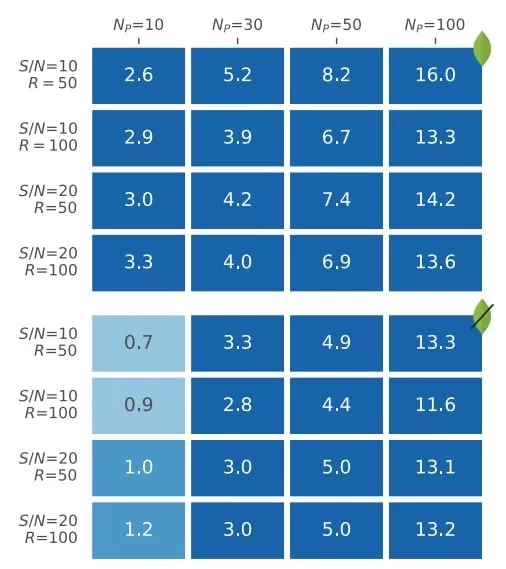
What they found was significant: even with modest data quality, the CO2 trends driven by the Cb-Si cycle were clearly detectable in simulated populations of 30 or more exoplanets.
 This diagram illustrates simulated atmospheric CO2 trends on exoplanets. The top panel shows potential trends on planets with biological activity (biotic), and the bottom shows trends on planets without life (abiotic). Detecting these patterns across a population of planets could reveal if a natural thermostat is working and potentially hint at the presence of a biosphere. (Credit: Hansen et al. 2025. ApJ)
For example, the simulations showed that planets receiving more energy from their star (meaning they’d tend to warm up) often exhibited lower atmospheric CO2 if the Cb-Si thermostat was actively removing carbon. This relationship creates a specific pattern when you look at a group of planets. Crucially, this pattern could potentially differ between planets where life assists the carbon-locking process (like marine organisms on Earth) and those where it’s purely geological.
 An illustration showing the proposed LIFE (Large Interferometer For Exoplanets) mission concept. This future five-satellite observatory is designed to analyze the atmospheres of numerous Earth-sized exoplanets, which could enable the detection of population-wide climate patterns. (Credit: ETH Zurich/LIFE Initiative)
A More Efficient Search
This population-level approach offers a potential way to “filter” the vast number of exoplanets. Instead of spending precious telescope time conducting deep dives into every single candidate, future missions could use this method to quickly assess which populations of planets show signs of this crucial climate regulation – a key marker of potential habitability.
If distinct CO2 trends can indeed signal the presence of life (for instance, if life significantly enhances the carbon cycle), this method could help identify populations where life might be common. It shifts the search from finding a single “smoking gun” biosignature on one world to looking for statistical patterns of habitability or even global-scale biospheres across many worlds.
While promising, the method still needs refinement. The current simulations use simplified atmospheric models, and real-world observations will have complexities like measurement biases.
What’s Next?
Future research needs to test this approach against simulations with more diverse and complex planetary atmospheres, including other gases that influence climate like methane and ozone.
Efforts like this are vital for preparing the next generation of powerful observatories. By developing smart, efficient strategies like population-level analysis of atmospheric CO2 trends, scientists can maximize their chances of finding habitable worlds and potentially answering the profound question of whether life exists beyond Earth.





