
In 2029, a large asteroid known as 99942 Apophis will pass incredibly close to Earth – closer than some orbiting satellites. This isn’t a threat, but an extraordinary scientific opportunity to study a substantial asteroid up close. The catch? Getting a spacecraft there in time requires rapid decisions and funding, turning this unique cosmic event into a high-stakes race against the clock for space agencies and potentially even private ventures.
Contents
Scientists are eager to study Apophis, a rocky body roughly 370 meters (about 1,200 feet) across. Its close flyby offers a rare chance to gather detailed data on an asteroid’s composition, structure, and how Earth’s gravity affects it during a close encounter. Think of it like a brief, close-up inspection of a fascinating space rock passing through our neighborhood. But capturing this moment requires a dedicated mission, and time is running out.
Why Apophis Matters: A Cosmic Visitor
Asteroids like Apophis are remnants from the early solar system, holding clues about its formation. Studying them helps us understand the building blocks of planets. The 2029 flyby is particularly exciting because Apophis will be visible to the naked eye from some parts of the world, and its close proximity allows for unprecedented scientific observation, both from Earth and, ideally, from a spacecraft. What happens to an asteroid when it gets a gravitational tug from a planet? Apophis is our chance to find out in detail.
The Tight Deadline for a Rendezvous
For a spacecraft to study Apophis before the 2029 flyby – the scientifically preferred scenario for collecting baseline data – it needs to launch by April 2028. That’s a tight window for planning, building, and launching a complex space mission. This urgency has prompted initial planning discussions among various space entities.
Missions Under Consideration
Several ideas are being explored to seize this opportunity:
ESA’s Ramses Mission Concept
The European Space Agency (ESA) is considering a mission concept called Ramses (Rapid Apophis Mission for Space Safety). Recognizing the short deadline, ESA has allowed European scientists and engineers to begin preliminary work. However, this is far from a guaranteed mission. A final decision to commit substantial funding won’t be made until ESA’s ministerial meeting in November. This uncertainty mirrors past projects; for example, a similar asteroid mission concept was not funded back in 2016. Developing and launching a planetary science mission in less than three years is a significant challenge.
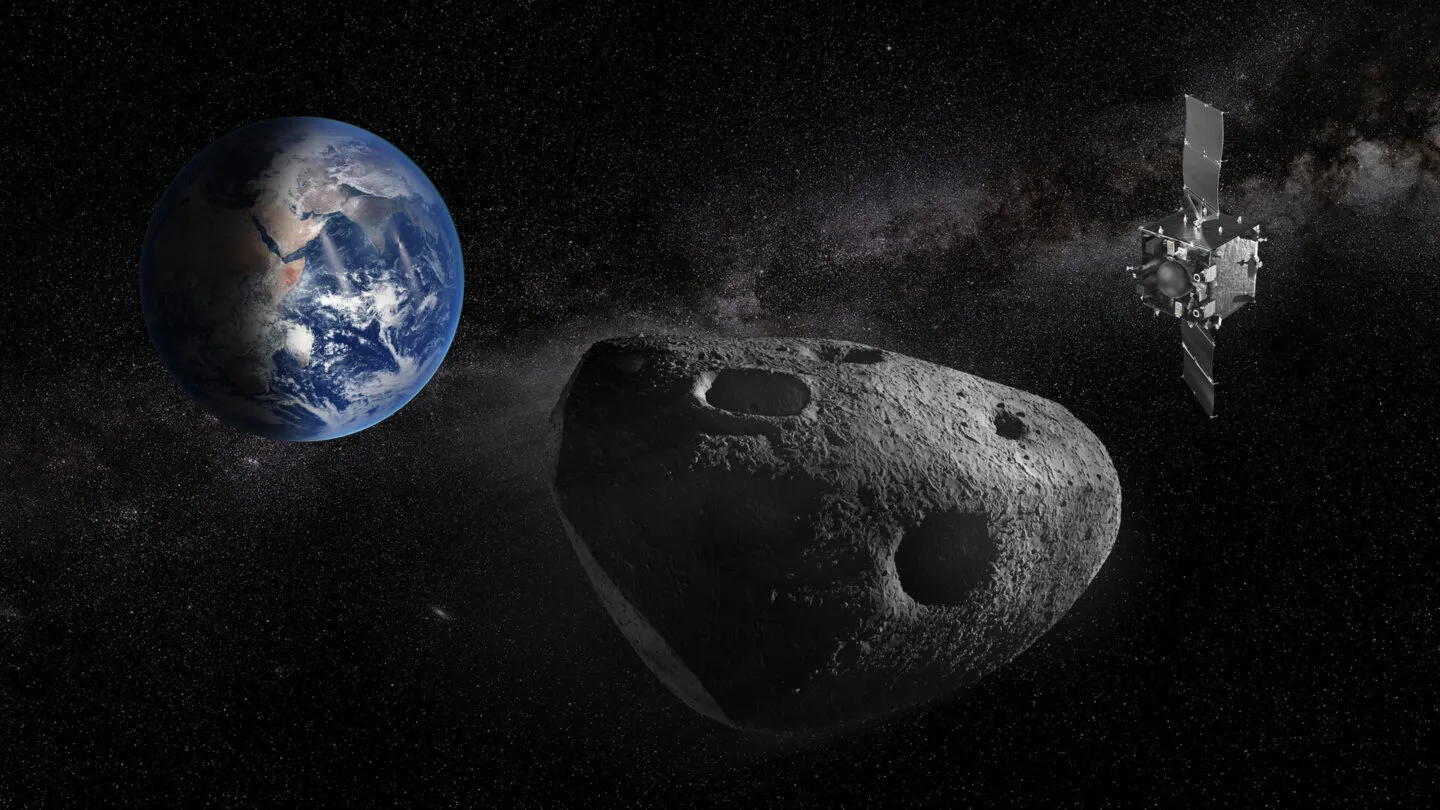 Artist's impression of ESA's Ramses spacecraft approaching the asteroid Apophis.
JAXA’s Potential Flyby
Japan’s space agency, JAXA, is working on its Destiny+ mission, primarily aimed at studying the asteroid 3200 Phaeton. While Destiny+ has faced delays, its current launch timing might allow for a single flyby of Apophis in February 2029 on its way to Phaeton. While valuable, a quick flyby provides much less detailed data compared to a mission that could spend time orbiting or even landing on Apophis before the Earth encounter. The exact distance of the Destiny+ flyby is also yet to be determined.
Beyond Traditional Space Agencies
Scientists have also proposed other concepts for studying Apophis, including missions to place seismometers on its surface to probe its interior – a technique never before used on an asteroid, like giving the asteroid an ultrasound. These ambitious ideas, however, face the same primary hurdle: significant funding.
With uncertainty surrounding support from agencies like NASA for related projects (such as the Apex mission concept), some researchers are exploring unconventional avenues, including private funding and philanthropy. The idea of leveraging existing assets, like mothballed spacecraft such as NASA’s Janus probes (if a launch vehicle were available at the right time), has also been floated. Industry experts suggest a new, reconnaissance-focused private mission could potentially be developed for $250 million or less, and there’s still just enough time for private groups to work with scientists on instrumentation.
Private astronaut Jared Isaacman, known for funding space endeavors, has confirmed he’s been approached about supporting an Apophis mission financially, stating he’s currently in an information-gathering phase. The desire to support robotic exploration in strategic areas aligns with the Apophis opportunity.
The Urgency is Real
The challenge is clear: while plans and possibilities are being discussed, Apophis continues its journey towards its 2029 rendezvous. The window to send a dedicated mission that can study the asteroid before this defining event is rapidly closing. Securing the necessary funding and making swift decisions are critical if humanity is to fully capitalize on this rare cosmic opportunity.
Losing the chance to study Apophis up close during its historic flyby would mean missing out on invaluable scientific data that could reshape our understanding of asteroids and planetary formation. The clock is truly ticking.





