
For decades, astronomers believed that massive galaxies eventually “die” by stopping their star formation, becoming quiet, unchanging systems. However, a new study using data from the Hubble Space Telescope has revealed a surprising twist: some of these supposedly dead galaxies are still experiencing significant bursts of new star birth. These cosmic wanderers, behaving more like zombies than truly deceased objects, challenge our understanding of how galaxies evolve over billions of years. The key takeaway is that massive galaxies previously thought to be dormant are surprisingly still forming stars, behaving like “zombies,” a finding that uses Hubble data and suggests internal processes might be the cause.
Contents
The Mystery of ‘Dead’ Galaxies
Think of a galaxy like a giant city. Young galaxies are bustling metropolises constantly building new structures (forming stars) from vast clouds of gas. As they age, many massive galaxies are expected to run out of building material or have processes shut down construction, becoming quiet, dormant cities with little new growth. This process is known as “quenching.” Scientists have been trying to figure out exactly how and why this quenching happens – how galaxies transition from vibrant star factories to quiet, aging systems.
Hunting for Hidden Life
A team led by Michael Rutkowski set out to study these massive galaxies, specifically those with stellar masses greater than 10 billion times the mass of our Sun, which are typically expected to be quenched. They used data from the UVCANDELS survey, one of the deep sky surveys conducted by the Hubble Space Telescope.
To find potential hidden star formation, the team looked for ultraviolet (UV) light. Very hot, young stars shine incredibly brightly in UV wavelengths, but they don’t live for very long. Finding UV light is like finding fresh construction sites – a sure sign that new building (star formation) is happening now or happened very recently. By focusing on galaxies with no signs of bright, active black holes at their centers, the researchers ensured that any detected UV light was likely coming from stars, not the black hole’s activity.
The galaxies they studied are quite distant, with redshifts between 0.5 and 1.5. Redshift is a way astronomers measure how much the light from distant objects has been stretched by the expansion of the universe, effectively telling us how far away they are and, thus, how far back in time we are looking. In this case, the team was looking back 5 to 9 billion years, a crucial period just after the peak of star formation activity in the cosmos.
 Artist's illustration depicting a bright, active galactic nucleus powered by a supermassive black hole at the center of a galaxy.
A Shocking Discovery: The ‘Zombies’
Out of 1,067 massive galaxies studied, which otherwise looked like typical ‘dead’ systems similar to the large, old elliptical galaxies seen in our local universe, a surprising 15% showed significant UV emission. This UV light indicated that these galaxies had undergone a recent burst of star formation, forming up to 10% of their total stellar mass within the last billion years.
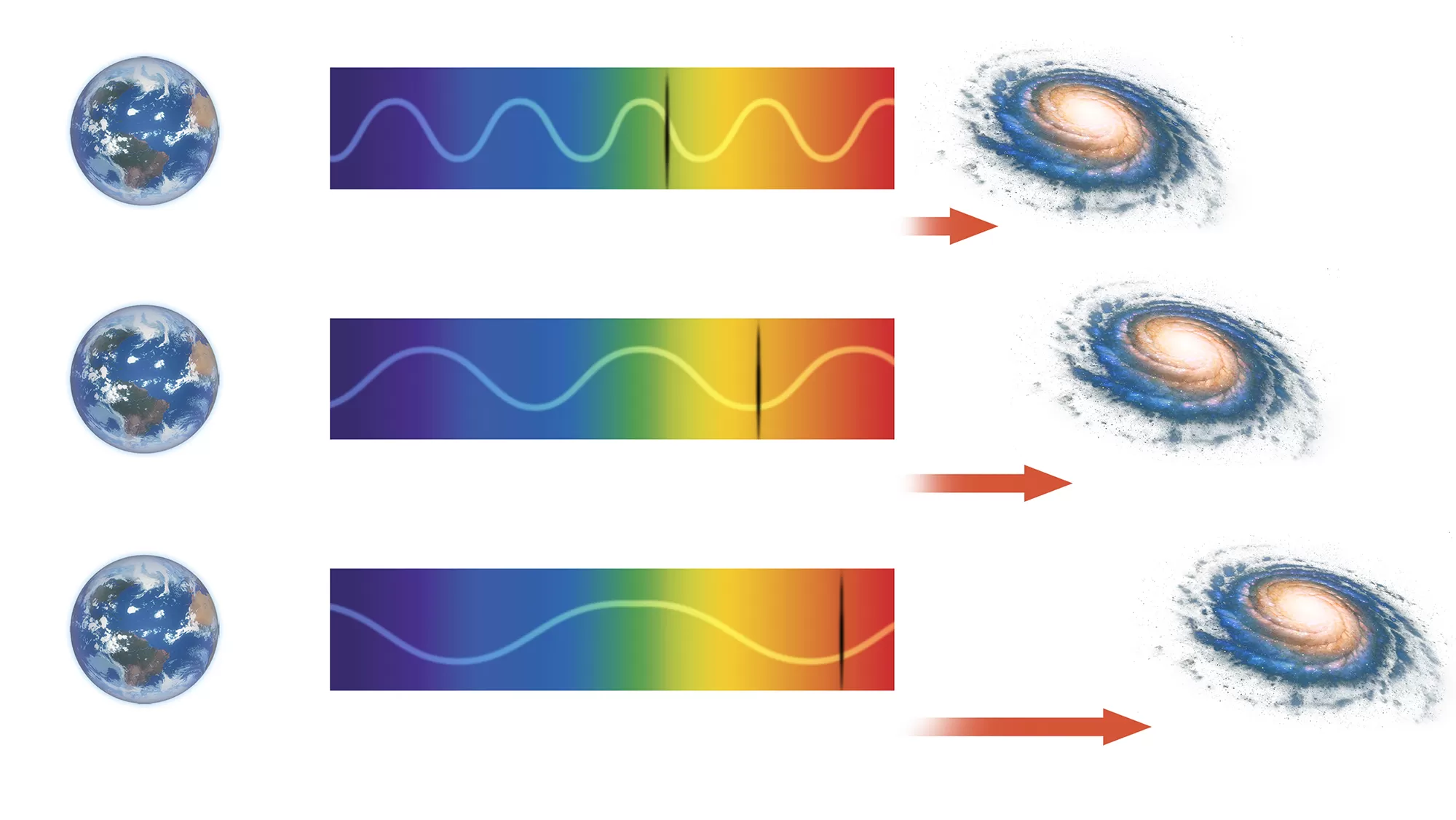 Diagram illustrating cosmological redshift, showing light from distant galaxies shifting towards redder wavelengths as the universe expands.
For a massive galaxy, even 10% of its stars is a staggering amount – millions or even billions of new suns being born in a system that was supposed to be dormant. It’s like finding an old, quiet city suddenly experiencing a massive, unexpected construction boom. These are the “zombie galaxies” – appearing lifeless from the outside, but secretly bursting with activity.
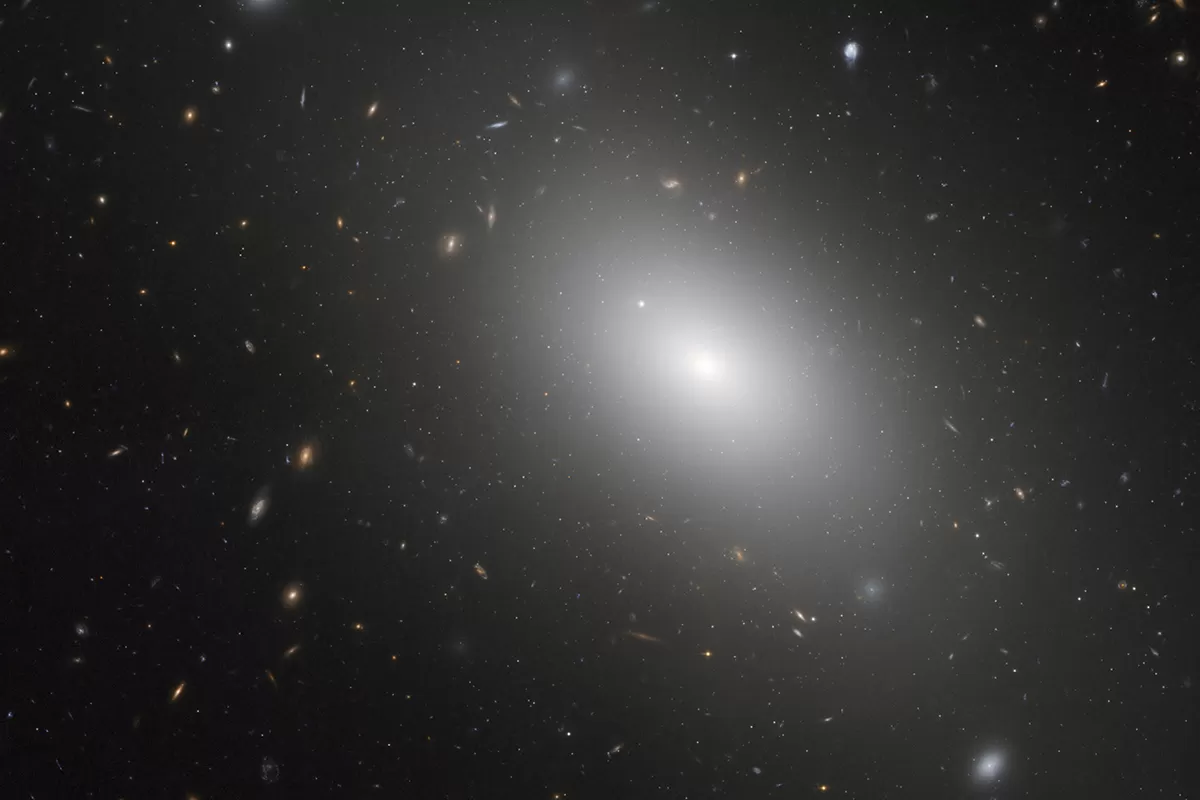 Hubble Space Telescope image of the massive elliptical galaxy NGC 1132, which appears to lack significant structure.
What’s Bringing Them Back?
So, how can these massive, seemingly ‘dead’ galaxies suddenly spring back to life? One common idea for reigniting star formation in quenched galaxies is through galaxy mergers. When two galaxies collide and merge, the interaction can compress gas, triggering intense bursts of star formation. This would be like two cities combining and using the disruption to spur major rebuilding efforts.
However, the team’s data didn’t support this ‘vampire’ hypothesis (where a larger galaxy consumes a smaller one). They found no link between the density of the environment a galaxy lived in (where mergers are more common) and the likelihood of it showing recent star formation. This suggests that external collisions aren’t the primary cause for these particular zombie galaxies.
Instead, the findings point towards some kind of internal process within the galaxy itself. Scientists aren’t yet sure what this process is, but possibilities include complex interactions between the galaxy’s gas, stars, and potentially even the central black hole, even when the black hole is not actively feeding and shining brightly.
Why Does This Matter?
This discovery of massive “zombie galaxies” is more than just a cosmic curiosity. It significantly impacts our understanding of how galaxies grow and evolve across the age of the universe. If massive galaxies can periodically restart star formation, it means our models of galaxy evolution need to be revised. It tells us that the universe is perhaps more dynamic and full of surprises than previously thought, even in the most massive and seemingly settled systems.
Future observations with powerful telescopes will be crucial to unraveling the mystery of what internal mechanisms are capable of reigniting star formation on such a large scale in these massive, old galaxies. The universe continues to reveal its secrets, showing us that even the ‘dead’ can sometimes walk again.





