
For centuries, we’ve linked fire use to human evolution, often thinking of warmth or cooking. But what if the spark that ignited humanity’s relationship with flames was something else entirely: the need to preserve massive meat hauls? A groundbreaking new study suggests that early human fire use, possibly dating back almost 2 million years, might have begun primarily for smoking and drying meat from large animal hunts, providing a crucial energy payoff that made the effort of fire worthwhile. This research reshapes our understanding of why controlling fire was such a pivotal step for our ancestors.
Contents
Controlling fire was a huge challenge for early humans, requiring significant time and energy to ignite and maintain. While the benefits of cooked food and warmth are clear, a new hypothesis proposes that the energy gains from preserving large quantities of meat through smoking could have been the primary, compelling reason our ancestors invested in making fire in the first place.
The Mystery of Early Fire
For a long time, scientists have debated why early humans, specifically species like Homo erectus, began using fire. Evidence at ancient sites older than 400,000 years is often scarce and sporadic, suggesting fire wasn’t used constantly or casually. If fire was mainly for warmth or cooking small meals, the energy required to keep it going might have outweighed the immediate benefits. So, what was the powerful incentive?
A New Hypothesis: Preservation Power
Researchers from Tel Aviv University in Israel, building on their previous work about early human hunting of large animals and the subsequent shrinking of prey sizes, propose a compelling answer: preserving the enormous bounty from hunting megafauna.
Imagine taking down a massive animal like an ancient elephant. That’s not just one meal; it’s millions of calories that could feed a group of people for weeks or even months. But without refrigeration, this precious resource would quickly spoil. Smoking and drying the meat over a fire would have been a game-changer, allowing these early humans to store and consume this high-energy food over extended periods.
Evidence from Ancient Sites
To explore this idea, the researchers analyzed data from nine different archaeological sites across Africa, Europe, and the Middle East, some with evidence dating back nearly 2 million years. They looked at animal remains found at these sites and compared them to evidence of fire use.
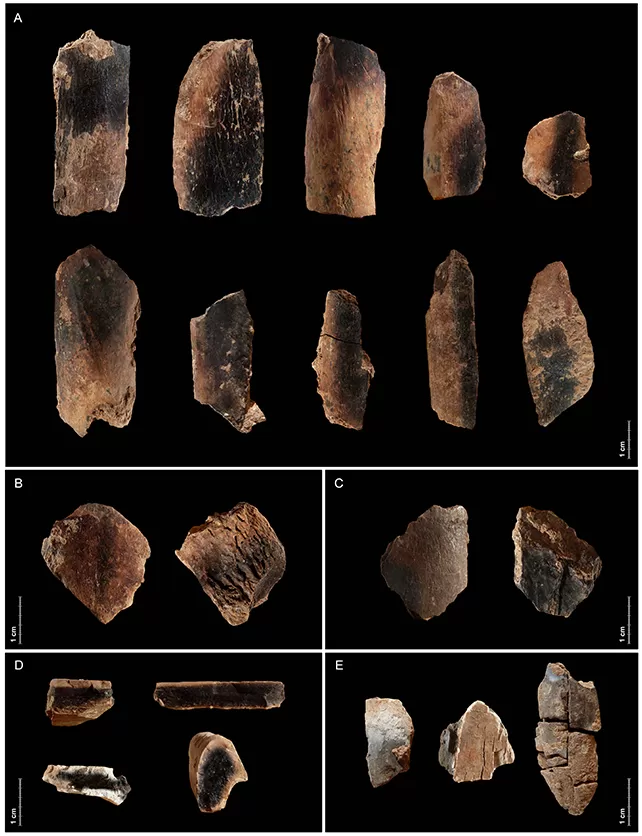 Ancient burnt animal bones found at an archaeological site, potential evidence of early human fire use.
Consistently, wherever signs of early fire were found, so were the remains of large animals. This correlation suggests a link beyond just warming up or roasting a small portion of a kill. The sheer scale of calories available from large game points towards a need for preservation.
The Energy Equation
The researchers performed calculations comparing the energy return of simply cooking and eating a large animal carcass immediately versus the energy needed to maintain a fire for preservation. They argue that the energy investment in fire wouldn’t make sense for just a few cooked meals. However, preserving a vast amount of meat provided an energy payoff that could sustain the group for months, making the effort of fire production highly worthwhile.
Paleoanthropologist Miki Ben-Dor notes that gathering fuel and maintaining a fire was “significant effort,” requiring a strong, energy-efficient motive. Preserving a multi-million calorie resource fits this description perfectly.
Beyond preservation, fire also offered another crucial benefit when dealing with a large kill: keeping dangerous scavengers away. A fire’s glow and heat would deter lions, hyenas, and other predators attracted to the carcass, protecting both the food and the humans.
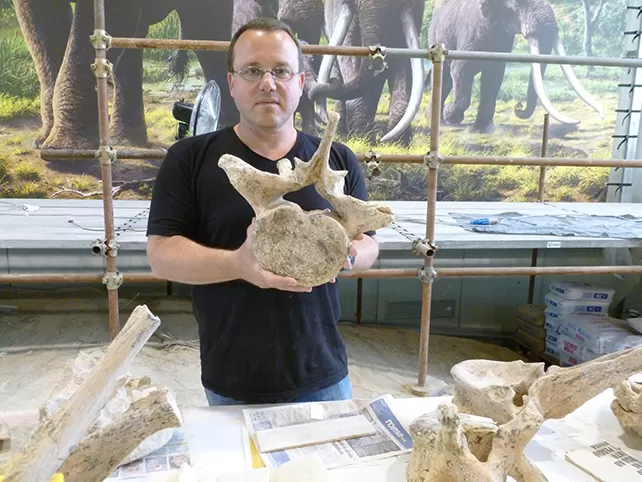 Professor Ran Barkai of Tel Aviv University examining a large ancient elephant bone, central to research on early human hunting and fire.
Archaeologist Ran Barkai highlights that early fire use was likely occasional and for specific purposes. “It is likely that once the fire was produced for these purposes,” he says, “it was also occasionally used for cooking – at zero marginal energetic cost.” In other words, cooking was likely a secondary benefit that became easier once fire was already being used for the more energy-demanding task of preservation.
Why It Matters
This new perspective challenges the traditional view of early human fire use and its role in our development. It suggests that the strategic management of food resources, specifically the preservation of large meat quantities, could have been a primary driver behind one of humanity’s most significant technological advancements. Understanding this relationship helps paint a clearer picture of our ancestors’ ingenuity, resourcefulness, and the complex challenges they faced in surviving and thriving.
The study has been published in Frontiers in Nutrition. This research opens up new avenues for investigating early human diet, behavior, and the deep history of our relationship with fire.





