
For years, astronomers thought massive galaxies eventually stopped forming new stars, becoming quiet and ‘dead’. This process, where star formation effectively shuts down, is known as quenching. But new data from the Hubble Space Telescope reveals a surprising truth: some of these seemingly dormant giants are still undergoing powerful bursts of star formation, acting more like ‘zombie galaxies’ that refuse to stay quenched. This discovery challenges our understanding of how galaxy star formation ends and reveals that the universe is full of cosmic surprises.
This finding means that the story of how galaxies evolve is more complex than previously thought. Massive galaxies don’t always follow a simple path to retirement; they can have unexpected periods of rebirth.
To understand this, think of a galaxy like a cosmic city. Young cities are bustling, constantly building new structures (stars) from available materials (gas and dust). These young galaxies shine bright, often appearing blue from the light of hot, massive new stars. As a city ages, building might slow down or stop as resources are used up or other factors intervene. In galaxies, this shutdown is called quenching.
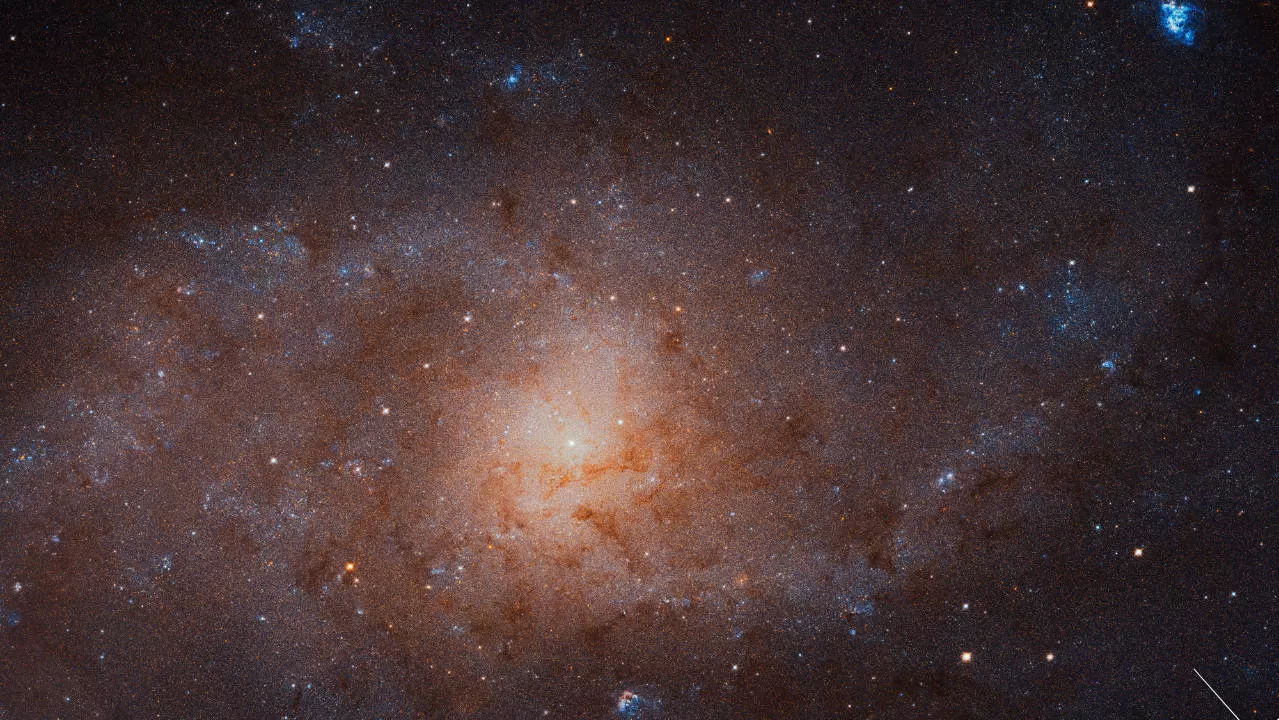 Hubble image showing bright blue regions of intense star formation within a spiral galaxy, highlighting where young, massive stars are born.
Now, a team led by Michael Rutkowski looked at some of the biggest galaxies in the universe, those with stellar masses greater than 10 billion times that of our Sun, and which we expected to have quenched long ago. They specifically selected galaxies that didn’t show signs of active black holes, which can confuse observations with their bright emissions.
Catching Cosmic ‘Zombies’ in the Act
The astronomers used data from a special Hubble survey that observes galaxies in ultraviolet (UV) light. Why UV? Because brilliant, massive young stars shine brightest in this part of the light spectrum, and they live fast and die young. So, spotting UV light is like finding fresh construction sites – a tell-tale sign of recent star formation, even if the rest of the galaxy looks old and quiet.
The galaxies in this study are located at distances where their light has traveled for 5 to 9 billion years to reach us. This means we are seeing them as they were during a crucial period in the universe’s history, not long after the peak rate of cosmic star formation.
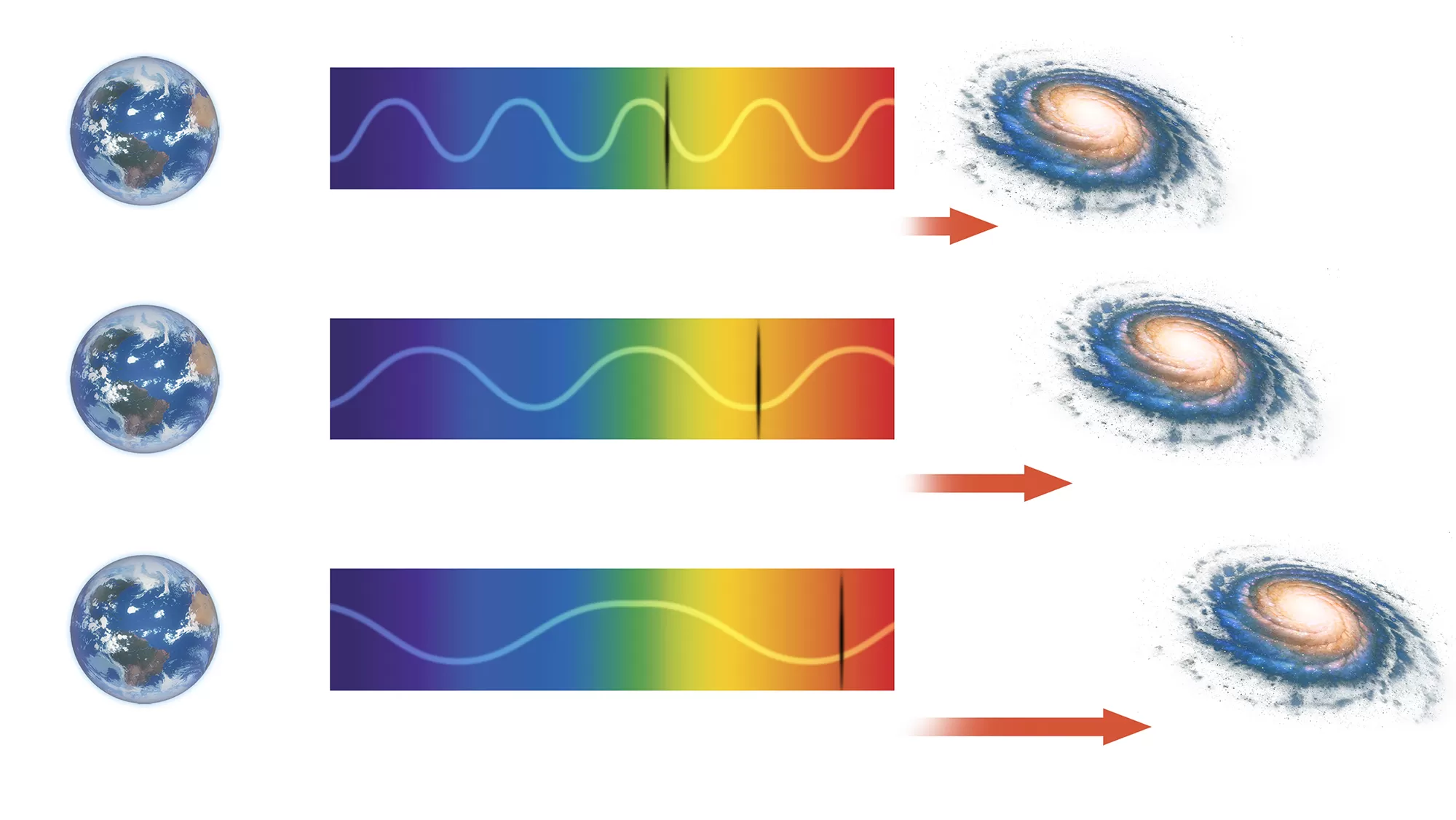 Diagram illustrating cosmic redshift, showing how light from distant galaxies is stretched to redder wavelengths as the universe expands.
Out of the 1,067 massive galaxies in their sample, which mostly look like the smooth, featureless elliptical shapes typical of quenched systems in the nearby universe, about 15% were surprisingly bright in UV light.
This UV brightness indicates that these seemingly dead galaxies had undergone a significant burst of star formation relatively recently – within the last billion years. While this recent burst only accounts for up to 10% of a galaxy’s total stellar mass, for a massive galaxy, this still represents a substantial episode of new star birth. The ‘zombie’ galaxy was briefly reanimated!
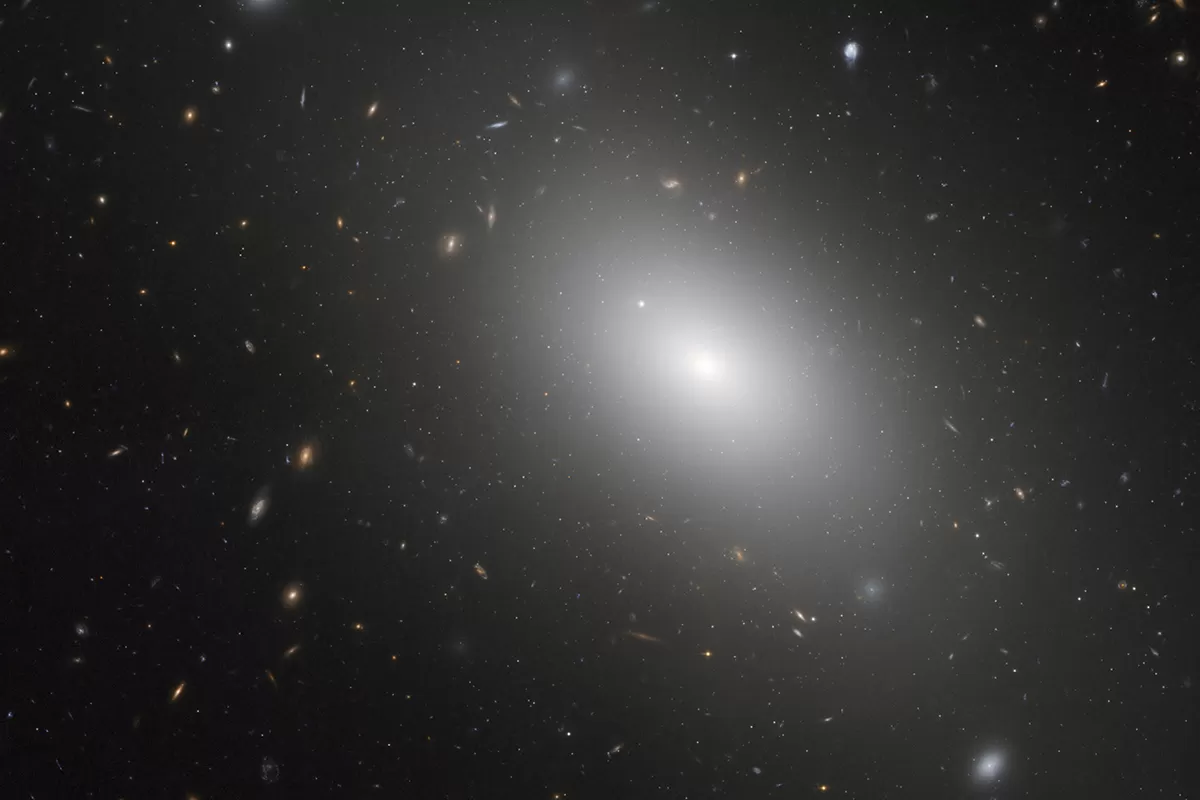 Hubble Space Telescope image of NGC 1132, a large, smooth elliptical galaxy often considered representative of quenched galaxies.
The Mystery: How Do ‘Dead’ Galaxies Revive?
Finding star formation in these massive, old-looking galaxies is unexpected. Astronomers first considered the idea that these bursts could be triggered by a galaxy merger, where a large galaxy consumes a smaller, gas-rich one. This would provide a fresh supply of fuel for new stars.
However, the study found no evidence supporting this “vampire” hypothesis. If mergers were the cause, they would expect to see more of these star-forming bursts in galaxies located in dense cosmic environments, where collisions happen more frequently. The observations didn’t show this correlation.
This suggests that the cause of these star-forming reanimations must be something else – likely an internal process within the galaxy itself that we don’t yet fully understand. It’s possible that the supermassive black hole lurking at the galaxy’s center, even when in a quiet state and not actively emitting light like those in active galactic nuclei, could somehow be influencing the gas and triggering these bursts.
 Illustration depicting an active supermassive black hole at the center of a galaxy, surrounded by a bright accretion disk and powerful jets.
The discovery of these ‘zombie galaxies’ shows that the process of galaxy star formation shutting down is far more complex and unpredictable than we thought. Understanding these unexpected bursts is crucial for creating accurate models of how galaxies grow and evolve across the universe. Future observations with powerful telescopes will be essential to unraveling the mystery of what’s reawakening these seemingly dead cosmic giants and how often it happens.





