
Scientists have made a concerning discovery: a significant portion of the world’s oceans is becoming darker. This phenomenon, termed ocean darkening, means that sunlight can’t penetrate as deeply into the water as it used to, which could have major implications for marine life and ecosystems.
Contents
A recent study from the University of Plymouth found that over the past two decades, 21% of the global ocean has experienced this darkening effect.
What is Ocean Darkening?
Imagine the ocean surface as a window for sunlight. Ocean darkening is like that window becoming less transparent or the water itself becoming cloudier. Instead of light traveling deep, it gets absorbed or scattered closer to the surface. This reduces the “lit” depth available for marine organisms.
How Much Light is Lost?
The study, published in Global Change Biology, analysed data from 2003 to 2022. It revealed that across 21% of the ocean, the amount of sunlight reaching certain depths has decreased.
For an area roughly the size of Africa – more than 9% of the ocean – light levels were significantly reduced by over 164 feet (50 meters) deep. In a smaller, but still substantial, 2.6% of the ocean, light was reduced beyond 328 feet (100 meters).
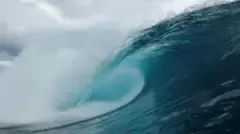 Dark blue wave cresting in cloudy weather, illustrating the concept of ocean darkening reducing sunlight penetration.
What’s Causing This Change?
Researchers believe several factors contribute to ocean darkening. Changes in tiny marine organisms called plankton, particularly shifts in algal blooms (which are like massive, temporary blooms of microscopic plants), can make the water more opaque.
Changes in sea surface temperatures and even artificial light sources are also thought to play a role. These factors can alter the biological and physical properties of the upper ocean layers, affecting how light is absorbed and scattered.
Why Should We Care?
While the full extent of the impact isn’t yet understood, scientists are concerned because many marine species rely on light. They use it for navigation, finding food, reproduction, and other vital processes. If the “lit” part of the ocean shrinks, it forces species that need light into a smaller volume of water, potentially increasing competition and disrupting ecosystems.
Dr Thomas Davies, associate professor of Marine Conservation at the University of Plymouth, highlights that this isn’t just about marine life. He notes that ocean darkening could impact the air we breathe, the fish we eat, and even the planet’s ability to combat climate change.
Prof Tim Smyth from the Plymouth Marine Laboratory adds that animals needing light might be forced closer to the surface, leading to increased competition for resources. This could trigger fundamental shifts throughout the entire marine ecosystem.
The findings represent a genuine cause for concern and underscore the interconnectedness of global changes affecting our planet’s largest habitat. Understanding ocean darkening is a crucial step in protecting the health of our oceans and the life within them.
You can learn more about other changes affecting our oceans, such as rising UK sea temperatures or changes in marine animal populations.





