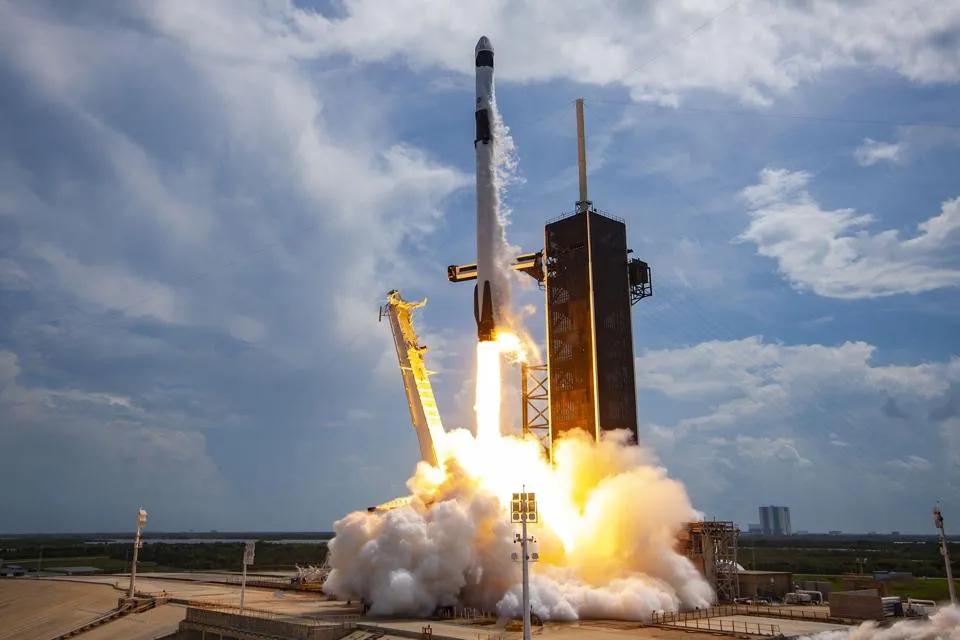
Our view of the cosmos, usually filled with the twinkling of distant stars, is increasingly threatened by a much closer source: the growing swarm of satellites orbiting Earth. As tens of thousands of these artificial lights reflect sunlight back down, astronomers face a significant challenge from light pollution, making it harder to study the universe. But a potential solution is heading to space – a satellite coated in one of the darkest materials ever created.
Contents
A new mission aims to test if painting satellites with a super-black coating, based on the famous Vantablack material, can drastically reduce their reflectivity and help preserve our view of the night sky. This innovative approach could be a critical step in mitigating the impact of large satellite constellations on ground-based astronomy.
The Growing Swarm of Satellites and Light Pollution
Just a few decades ago, space was far less crowded. Today, over 14,900 satellites orbit our planet, and that number is predicted to surge to over 100,000 within the next 50 years. This dramatic increase is largely due to private “megaconstellations” like SpaceX’s Starlink network, which already accounts for over 60% of active satellites.
These satellites, often made of reflective metal, catch sunlight and appear as bright streaks across the night sky. For astronomers using powerful telescopes, this creates significant light pollution, essentially “photobombing” sensitive observations of faint stars and galaxies. This issue is already impacting observatories worldwide, and newer, brighter satellites are only making the problem worse, often exceeding brightness limits suggested by astronomical bodies.
Related: An astronomer’s lament: SpaceX megaconstellations are ruining space exploration for everyone
A Material as Black as a Void
What if satellites could simply absorb the light instead of reflecting it? That’s where a material like Vantablack comes in. Often described as the blackest material on Earth, Vantablack is made from a dense forest of carbon nanotubes. When light hits this surface, it gets trapped and bounces around within the tubes until it’s almost entirely absorbed.
The version being tested for space is called Vantablack 310. It’s a specially modified coating designed to withstand the extreme conditions of space, like drastic temperature changes and constant bombardment by radiation. This advanced material can absorb an astonishing 99.965% of light that strikes it.
Kieran Clifford, a senior technologist at Surrey NanoSystems, the company that developed the material, highlighted its performance and suitability for the harsh low Earth orbit environment. The ultimate goal, he stated, is to ensure “sustainable and equitable access to a night sky for all.”
 Scientist holds material coated in ultra-black Vantablack paint, showing extreme light absorption for satellite use.
Testing the Darkness in Orbit
To see if this super-black coating can truly solve the light pollution problem and survive in space, researchers are launching a test satellite. Named Jovian-1, this “shoebox-size” cubesat will have one of its sides covered in the Vantablack 310 material.
Managed by the Joint Universities Programme for In-Orbit Training, Education and Research (JUPITER) – a collaboration involving the Universities of Surrey, Portsmouth, and Southampton in the U.K. – the mission will closely track Jovian-1 after its launch in 2026. By monitoring the satellite’s brightness and observing how the coating holds up over time, the team will gather crucial data on the material’s effectiveness and durability in the space environment.
 UK researchers from JUPITER program hold the Jovian-1 cubesat model being coated with Vantablack to reduce satellite light pollution.
More Challenges Beyond Light
While reducing reflectivity is a promising step towards mitigating light pollution, it’s important to note that megaconstellations pose several other challenges to both science and safety.
For instance, even a non-reflective satellite can contribute to radio pollution, emitting signals that interfere with ground-based radio telescopes and potentially making certain types of radio astronomy impossible in the future.
Related: No radio astronomy from the ground would be possible anymore: Satellite mega-swarms are blinding us to the cosmos, and a critical inflection point is approaching
The sheer number of satellites also dramatically increases the risk of collisions, adding to the growing problem of space junk in orbit. This debris field further elevates the chances of future collisions, potentially making certain orbital paths unusable.
Furthermore, as satellites reach the end of their short lifespans and deorbit, they burn up in Earth’s atmosphere. This process releases metal particles that contribute to atmospheric pollution, the full effects of which scientists are still working to understand.
Related: What goes up must come down: How megaconstellations like SpaceX’s Starlink network pose a grave safety threat to us on Earth
The Jovian-1 mission represents an exciting test of a cutting-edge material to address one piece of the puzzle posed by the increasing satellite population. If successful, painting future satellites black could be a vital tool in humanity’s ongoing effort to explore and understand the universe from our vantage point here on Earth.